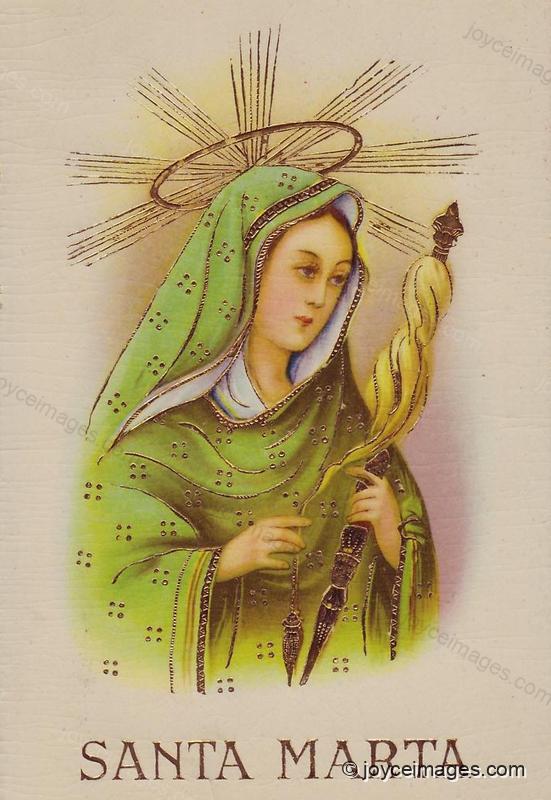
[*Ed. Martha of Bethany (died c. 85) was the sister of Saints Lazarus and Mary of Bethany. They were close friend of Jesus, and often received him in their home. Feast July 29.]
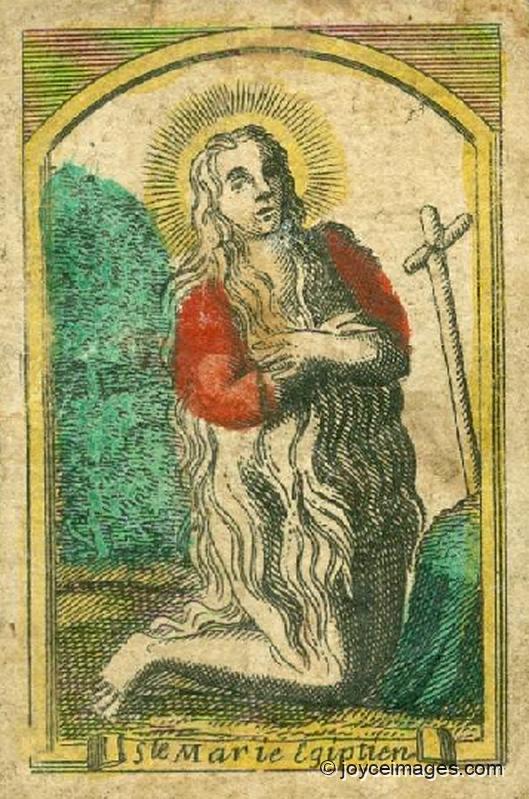
"and S. Mary of Egypt" (U12.1709)
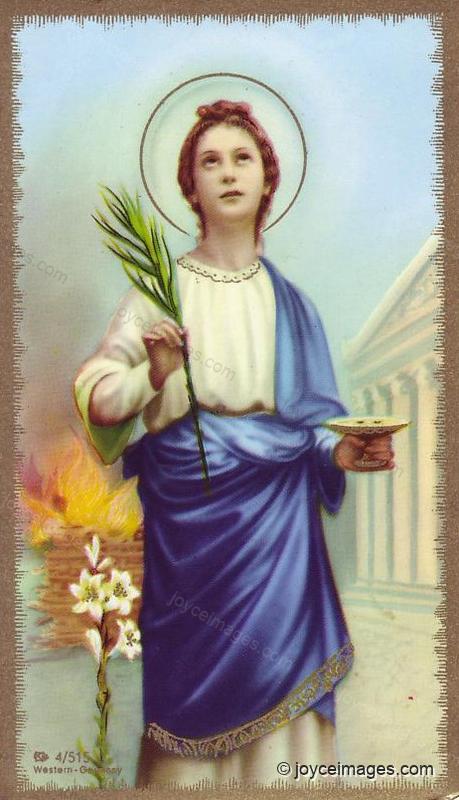
"and S. Lucy" (U12.1709)
[*Ed. S. Lucia de Syracuse (283-304) was born in Italy to a Christian family of Greek ancestry. Her father died when she was young. Her mother, Eutychia, arranged a marriage for her, but she had vowed her life to Christ. She won her mother's support by praying to S. Agatha, who miraculously cured her mother of a chronic haemorrhagic illness. Paschasius, the rejected pagan bridegroom, denounced Lucia as a Christian to the governor of Sicily who sentenced her to forced prostitution. When guards went to fetch her, they could not move her even when they hitched her to a team of oxen. The governor then ordered her killed. After torture that included having her eyes torn out, she was executed by stabbing. Represented holding a lamp, or carrying her eyes. Feast December 13. Trivia: Joyce's daughter was named Lucia.]
[*Ed. S. Lucia de Syracuse (283-304) was born in Italy to a Christian family of Greek ancestry. Her father died when she was young. Her mother, Eutychia, arranged a marriage for her, but she had vowed her life to Christ. She won her mother's support by praying to S. Agatha, who miraculously cured her mother of a chronic haemorrhagic illness. Paschasius, the rejected pagan bridegroom, denounced Lucia as a Christian to the governor of Sicily who sentenced her to forced prostitution. When guards went to fetch her, they could not move her even when they hitched her to a team of oxen. The governor then ordered her killed. After torture that included having her eyes torn out, she was executed by stabbing. Represented holding a lamp, or carrying her eyes. Feast December 13. Trivia: Joyce's daughter was named Lucia.]
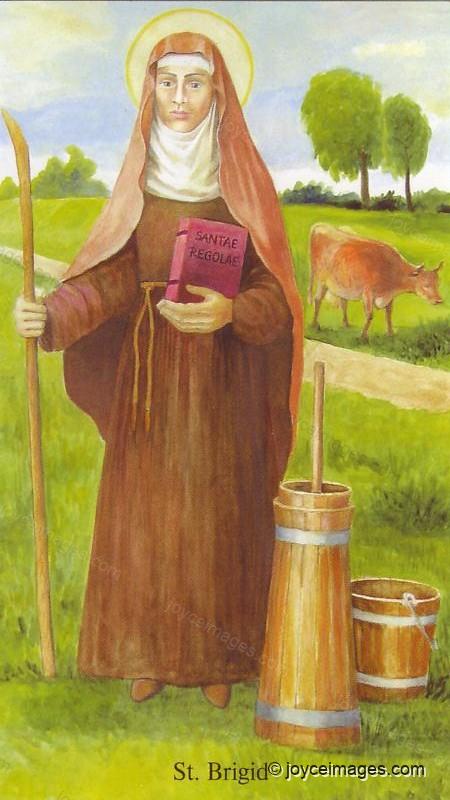
"and S. Brigid" (U12.1709)
[*Ed. S. Bridgid, aka Brigid of Kildare, or S. Bride (453-523) was Irish, the daughter of Dubtach, a wealthy pagan chieftain of Leinster, and Brocca, his Pictish Christian slave. As a child, she heard S. Patrick preach, which she never forgot. She grew up with high spirits and a tender heart. She could not bear to see anyone hungry or cold, and often gave away things that belonged to Dubtach, her father and legal owner. She gave his treasured sword to a leper while he was negotiating to sell her to the King of Leinster. Dubtach was about to strike her but the King, a Christian, interceded saying "Her merit before God is greater than ours." Dubtach solved this domestic problem by freeing Brigid, and putting her in charge of his dairy that prospered under her care. She refused a proposed marriage, went to Bishop Mel, a pupil of S. Patrick, and took her vows. At the invitation of bishops, she started convents all over Ireland and was a great traveller. Brigid started the monastery of Kildare on the Liffey river being for both monks and nuns. Represented as an abbess, usually holding a lamp or candle, often with a cow nearby. Feast February 1.]
[*Ed. S. Bridgid, aka Brigid of Kildare, or S. Bride (453-523) was Irish, the daughter of Dubtach, a wealthy pagan chieftain of Leinster, and Brocca, his Pictish Christian slave. As a child, she heard S. Patrick preach, which she never forgot. She grew up with high spirits and a tender heart. She could not bear to see anyone hungry or cold, and often gave away things that belonged to Dubtach, her father and legal owner. She gave his treasured sword to a leper while he was negotiating to sell her to the King of Leinster. Dubtach was about to strike her but the King, a Christian, interceded saying "Her merit before God is greater than ours." Dubtach solved this domestic problem by freeing Brigid, and putting her in charge of his dairy that prospered under her care. She refused a proposed marriage, went to Bishop Mel, a pupil of S. Patrick, and took her vows. At the invitation of bishops, she started convents all over Ireland and was a great traveller. Brigid started the monastery of Kildare on the Liffey river being for both monks and nuns. Represented as an abbess, usually holding a lamp or candle, often with a cow nearby. Feast February 1.]
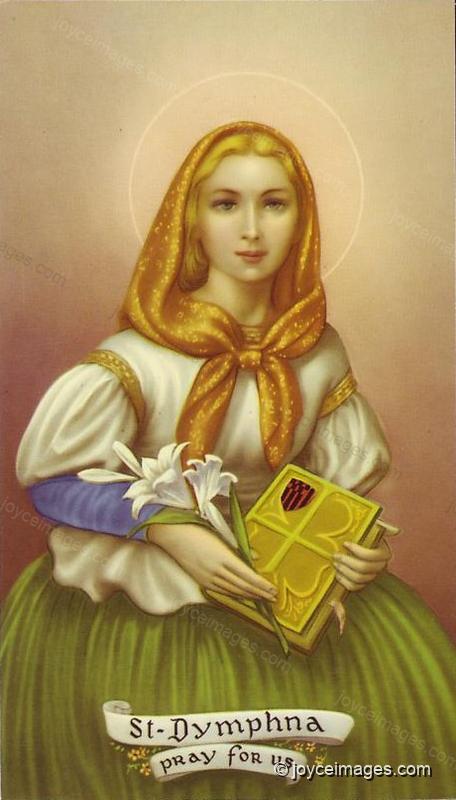
"and S. Attracta and S. Dympna and S. Ita" (U12.1710)
[*Ed. S. Dympna (or Dymphna) was the daughter of Damon, a pagan Irish chieftain, and a beautiful devoted Christian woman who died when Dympna was a teenager. Her father searched the Western world for a woman to replace his wife, saw that his daughter was as beautiful as her mother, and made advances on her. She fought him off and fled to Belgium with S. Gerebernus, an elderly priest. Damon hunted them down, and found them in Gheel (Belgium). He beheaded Gerebernus, and demanded that Dympna surrender to him. She refused, and he killed her in a rage. The site where she died, and her relics, are known for their miraculous healing of insanity, possession, and epilepsy. Represented as a young woman with the priest Gerebernus; being killed by her father; kneeling at Mass while her father murders Gerebernus; praying in a cloud surrounded by a group of lunatics bound with golden chains; as a princess holding a lamp, a sword, or the devil on a leash. Feast May 15.]
[*Ed. S. Dympna (or Dymphna) was the daughter of Damon, a pagan Irish chieftain, and a beautiful devoted Christian woman who died when Dympna was a teenager. Her father searched the Western world for a woman to replace his wife, saw that his daughter was as beautiful as her mother, and made advances on her. She fought him off and fled to Belgium with S. Gerebernus, an elderly priest. Damon hunted them down, and found them in Gheel (Belgium). He beheaded Gerebernus, and demanded that Dympna surrender to him. She refused, and he killed her in a rage. The site where she died, and her relics, are known for their miraculous healing of insanity, possession, and epilepsy. Represented as a young woman with the priest Gerebernus; being killed by her father; kneeling at Mass while her father murders Gerebernus; praying in a cloud surrounded by a group of lunatics bound with golden chains; as a princess holding a lamp, a sword, or the devil on a leash. Feast May 15.]
"and S. Marion Calpensis" (U12.1710)
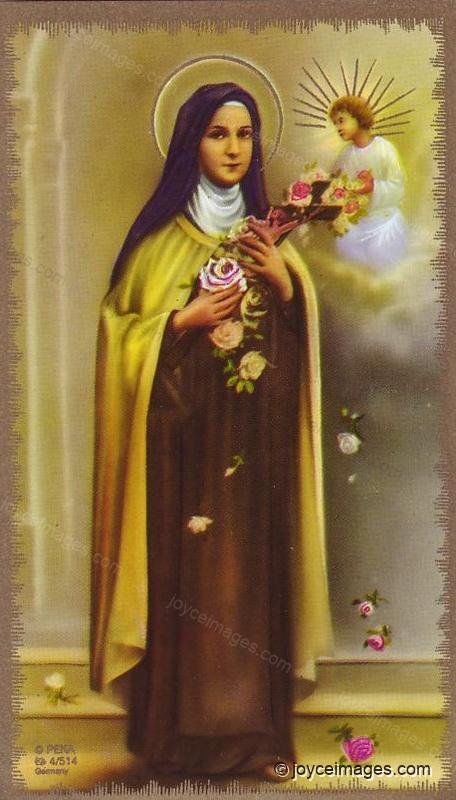
"and the Blessed Sister Teresa of the Child Jesus" (U12.1711)
[*Ed. S. Thérèse of Lisieux, aka Teresa of the Child Jesus, or the Little Flower (1873 - 1897) was the ninth child of saintly middle class French parents, Louis and Zélie Martin (five of their daughters became nuns). In 1888, at the unusual age of 15, Thérèse entered the Carmelite convent of Lisieux where two of her sisters had preceded her. She died in 1897 of tuberculosis and was canonized in 1925. She is represented as a Carmelite nun with a cross of roses, or with roses in her arms or at her feet. Feast October 1.]
[*Ed. S. Thérèse of Lisieux, aka Teresa of the Child Jesus, or the Little Flower (1873 - 1897) was the ninth child of saintly middle class French parents, Louis and Zélie Martin (five of their daughters became nuns). In 1888, at the unusual age of 15, Thérèse entered the Carmelite convent of Lisieux where two of her sisters had preceded her. She died in 1897 of tuberculosis and was canonized in 1925. She is represented as a Carmelite nun with a cross of roses, or with roses in her arms or at her feet. Feast October 1.]
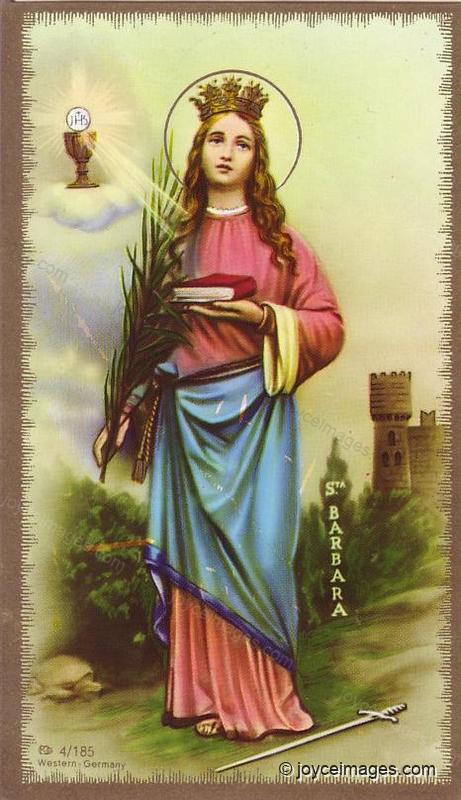
"and S. Barbara" (U12.1711)
[*Ed. S. Barbara (3 c.), or so legend has it, was a beautiful maiden imprisoned in a high tower by her father Dioscorus for disobedience. While there, she was tutored by philosophers, orators and poets. Under the influence of Origen and Valentinian, she converted to Christianity. Her father denounced her faith to the local authorities and he was ordered to kill her. She tried to escape, but he caught her, dragged her home by her hair, tortured then beheaded her. He was immediately struck by lightning. Represented as a princess with a chalice, a tower, or the palm of martyrdom. She was removed from the Roman calendar in 1969, as it was decided that her existence was the product of pious fiction.]
[*Ed. S. Barbara (3 c.), or so legend has it, was a beautiful maiden imprisoned in a high tower by her father Dioscorus for disobedience. While there, she was tutored by philosophers, orators and poets. Under the influence of Origen and Valentinian, she converted to Christianity. Her father denounced her faith to the local authorities and he was ordered to kill her. She tried to escape, but he caught her, dragged her home by her hair, tortured then beheaded her. He was immediately struck by lightning. Represented as a princess with a chalice, a tower, or the palm of martyrdom. She was removed from the Roman calendar in 1969, as it was decided that her existence was the product of pious fiction.]
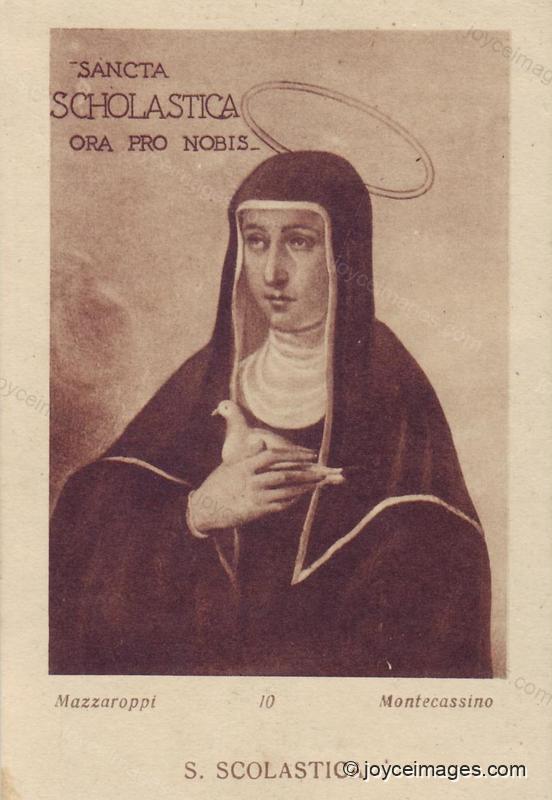
"and S. Scholastica" (U12.1711)
[*Ed. S. Scholastica (480-543) was of Roman nobility, the twin sister of S. Benedict. Her mother died in childbirth. She dedicated her life to God, becoming a nun at an early age. Pope Saint Gregory tells some of the stories of her life, including how she prayed for a thunderstorm one evening, so that her brother would stay with her all night discussing theological matters. Also how when she died, her brother saw her soul flying to heaven in the form of a dove. She is the patron saint against rain and storms. Represented as a nun with crozier and crucifix, or with a dove. Feast February 10.]
[*Ed. S. Scholastica (480-543) was of Roman nobility, the twin sister of S. Benedict. Her mother died in childbirth. She dedicated her life to God, becoming a nun at an early age. Pope Saint Gregory tells some of the stories of her life, including how she prayed for a thunderstorm one evening, so that her brother would stay with her all night discussing theological matters. Also how when she died, her brother saw her soul flying to heaven in the form of a dove. She is the patron saint against rain and storms. Represented as a nun with crozier and crucifix, or with a dove. Feast February 10.]
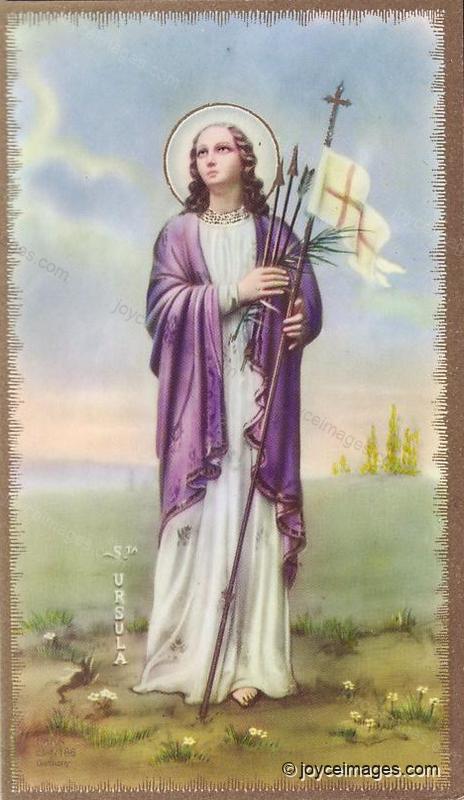
"and S. Ursula" (U12.1712)
[*Ed. S. Ursula was the daughter of a Christian British king. According to legend, she travelled in Europe with 10 noblewomen and 11,000 fellow maidens. Ursula and her companions were tortured to death to get them to renounce their faith. Represented with arrows, a banner, a cloak, or a clock; as a maiden shot with arrows...
[*Ed. S. Ursula was the daughter of a Christian British king. According to legend, she travelled in Europe with 10 noblewomen and 11,000 fellow maidens. Ursula and her companions were tortured to death to get them to renounce their faith. Represented with arrows, a banner, a cloak, or a clock; as a maiden shot with arrows...
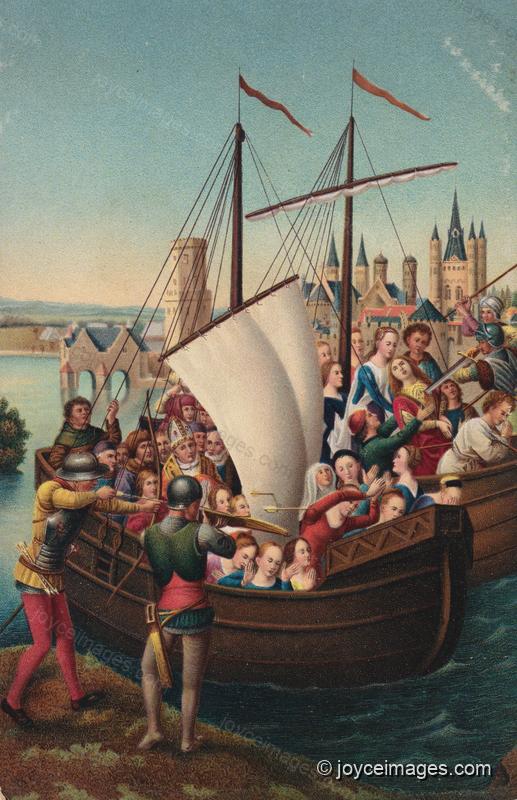
"with eleven thousand virgins." (U12.1712)
... or accompanied by her female companions, being martyred in assorted, often creative ways. The Ursuline Order, founded for the education of young Catholic girls and women, is named after her. Feast October 21. She was also removed from the calendar in 1969.]
... or accompanied by her female companions, being martyred in assorted, often creative ways. The Ursuline Order, founded for the education of young Catholic girls and women, is named after her. Feast October 21. She was also removed from the calendar in 1969.]
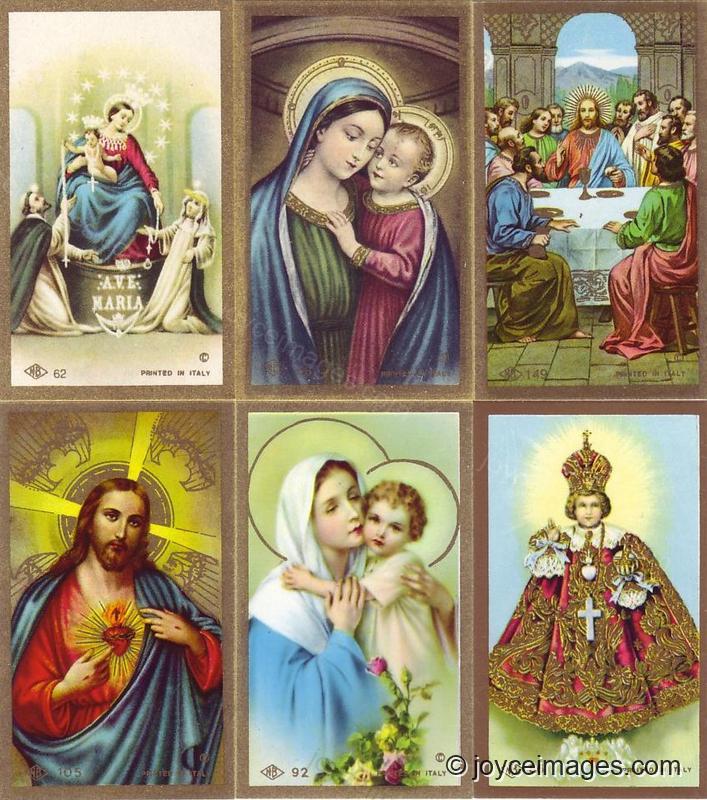
"And all came with nimbi and aureoles and gloriae," (U12.1712)
[*Ed. In Christian art, the 3 terms nimbus, aureole and glory refer to the radiance around a sacred figure. Though used with overlap, a NIMBUS strictly refers to radiance around the head. It can take several forms, as seen in these holy cards, including a luminous disk (= halo). The nimbus first appeared in Christian art in the 5c., but the same device had been used in non-Christian art (eg Persian, Indian) for several centuries.]
[*Ed. In Christian art, the 3 terms nimbus, aureole and glory refer to the radiance around a sacred figure. Though used with overlap, a NIMBUS strictly refers to radiance around the head. It can take several forms, as seen in these holy cards, including a luminous disk (= halo). The nimbus first appeared in Christian art in the 5c., but the same device had been used in non-Christian art (eg Persian, Indian) for several centuries.]
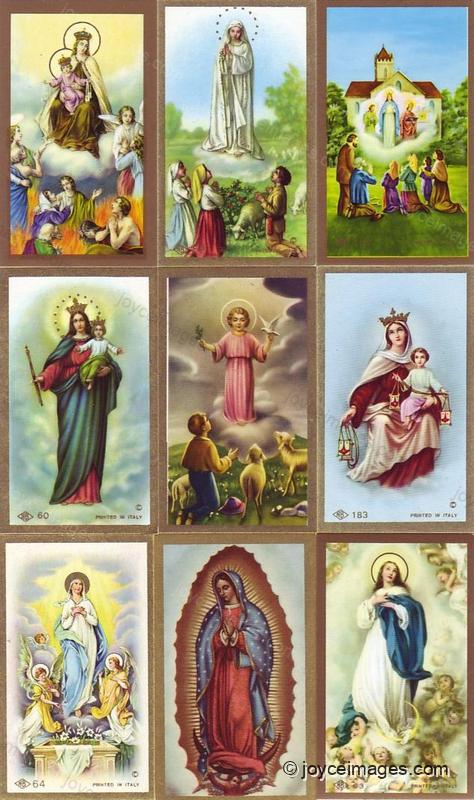
[*Ed. An AUREOLE (diminutive of Latin aura, "air") is the radiance which surrounds the whole figure. In the earliest periods of Christian art, this splendour was confined to the Christian Godhead; it was afterwards extended to the Virgin Mary and to several of the saints. The aureole often consists in a luminous cloud, and generally appears oval or elliptical in shape, but occasionally circular or quatrefoil.
A GLORY is the combination of nimbus and aureole.]
A GLORY is the combination of nimbus and aureole.]
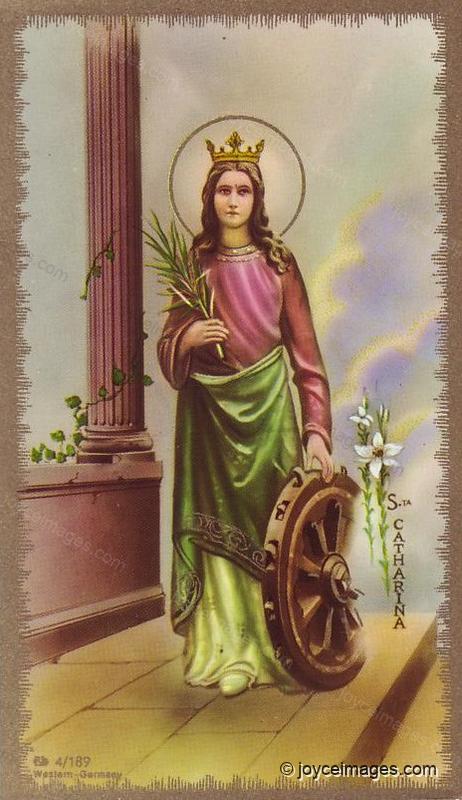
"bearing palms" (U12.1713)
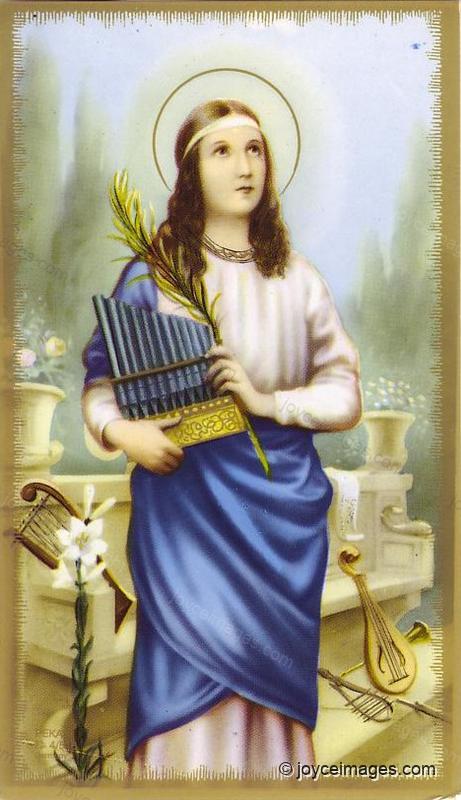
"and harps" (U12.1713)
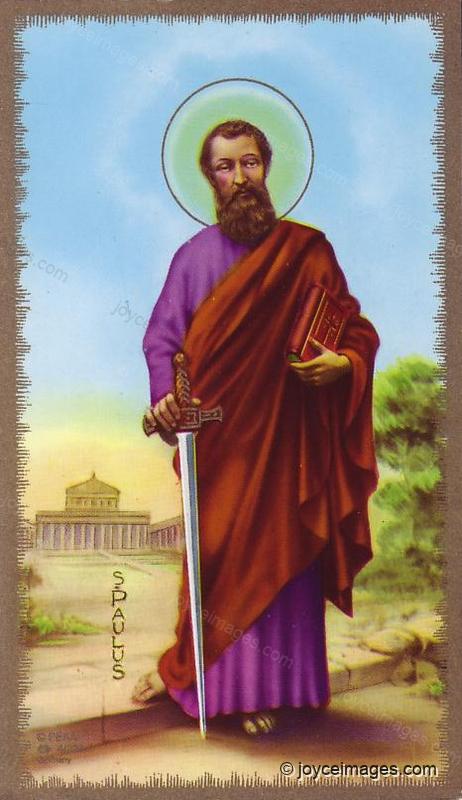
"and swords" (U12.1713)