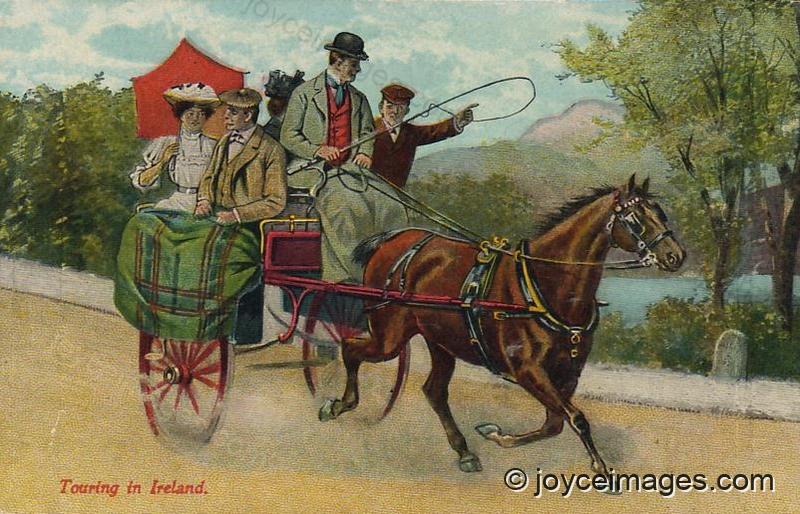
"Because of course uptodate tourist travelling was as yet merely in its infancy, so to speak, and the accommodation left much to be desired. Interesting to fathom, it seemed to him, from a motive of curiosity pure and simple, was whether it was the traffic that created the route or viceversa or the two sides in fact. He turned back the other side of the card, picture, and passed it along to Stephen." (U16.563)
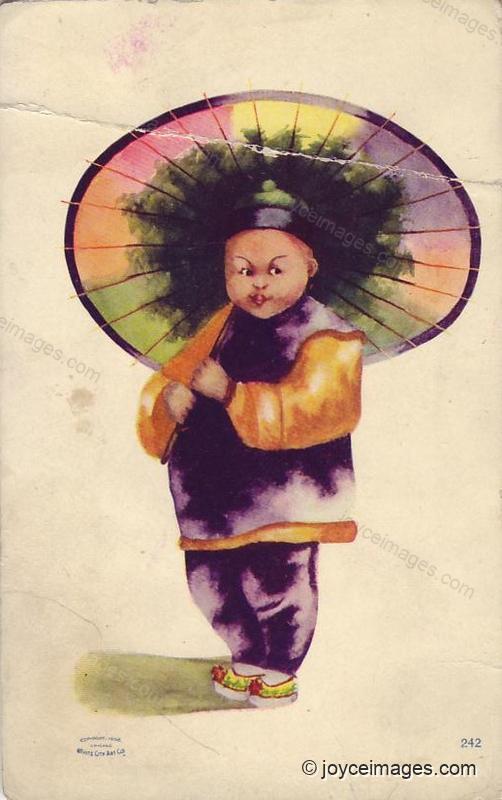
"- I seen a Chinese one time, related the doughty narrator, that had little pills like putty and he put them in the water and they opened, and every pill was something different. One was a ship, another was a house, another was a flower. Cooks rats in your soup, he appetisingly added, the Chinese does.
Possibly perceiving an expression of dubiosity on their faces, the globetrotter went on, adhering to his adventures." (U16.570)
Possibly perceiving an expression of dubiosity on their faces, the globetrotter went on, adhering to his adventures." (U16.570)
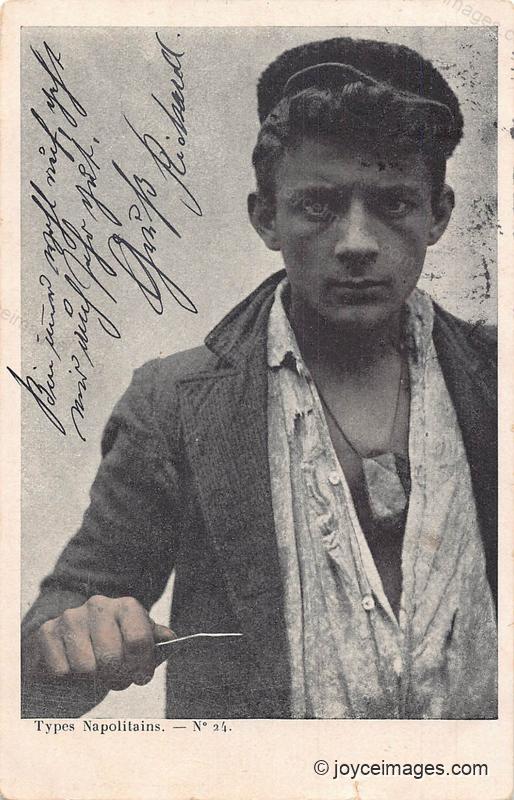
"—And I seen a man killed in Trieste by an Italian chap. Knife in his back. Knife like that." (U16.576)
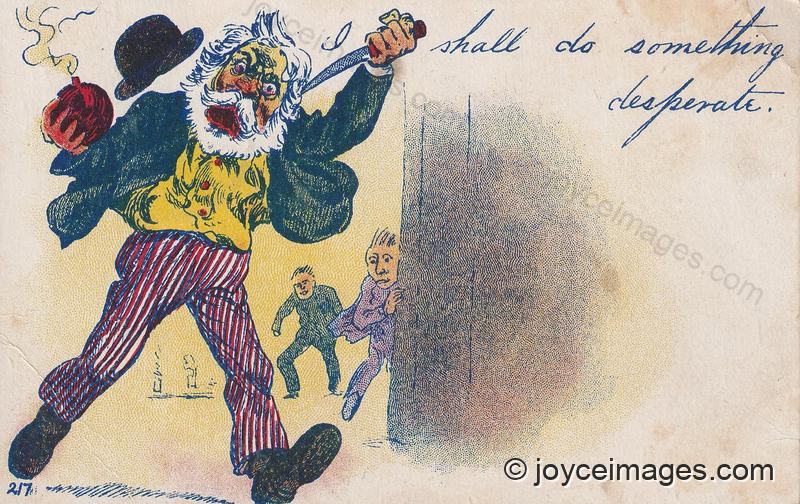
"Whilst speaking he produced a dangerouslooking claspknife quite in keeping with his character and held it in the striking position.
—In a knockingshop it was count of a tryon between two smugglers. Fellow hid behind a door, come up behind him. Like that. Prepare to meet your God, says he. Chuk! It went into his back up to the butt.
His heavy glance drowsily roaming about kind of defied their further questions even should they by any chance want to." (U16.578)
—In a knockingshop it was count of a tryon between two smugglers. Fellow hid behind a door, come up behind him. Like that. Prepare to meet your God, says he. Chuk! It went into his back up to the butt.
His heavy glance drowsily roaming about kind of defied their further questions even should they by any chance want to." (U16.578)
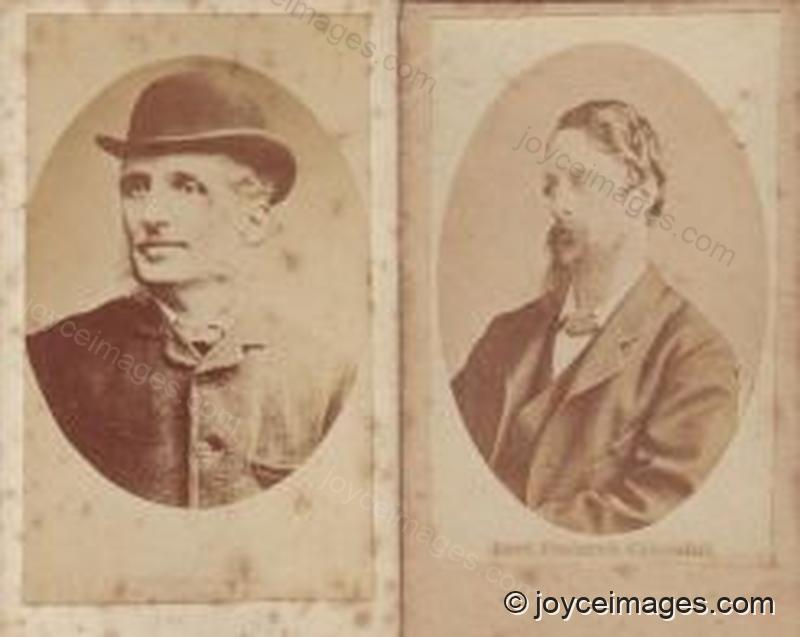
"That was why they thought the park murders of the invincibles was done by foreigners on account of them using knives." (U16.590)
On May 6th 1882, Thomas Henry Burke (Permanent Under Secretary for Ireland) and Lord Frederick Cavendish (newly appointed Chief Secretary for Ireland) were murdered in Phoenix Park by members of the Invincibles, a radical Irish nationalist secret society. Cavendish had just arrived in Ireland, and the two men were on their way to the Viceregal Lodge. The killers used surgical knives: rather than stabbed, the victims were slashed with long cuts all over their body. Dr. Thomas Myles, surgeon at the nearby Steevens's Hospital, was summoned -to no avail- for medical assistance to the victims.
On May 6th 1882, Thomas Henry Burke (Permanent Under Secretary for Ireland) and Lord Frederick Cavendish (newly appointed Chief Secretary for Ireland) were murdered in Phoenix Park by members of the Invincibles, a radical Irish nationalist secret society. Cavendish had just arrived in Ireland, and the two men were on their way to the Viceregal Lodge. The killers used surgical knives: rather than stabbed, the victims were slashed with long cuts all over their body. Dr. Thomas Myles, surgeon at the nearby Steevens's Hospital, was summoned -to no avail- for medical assistance to the victims.
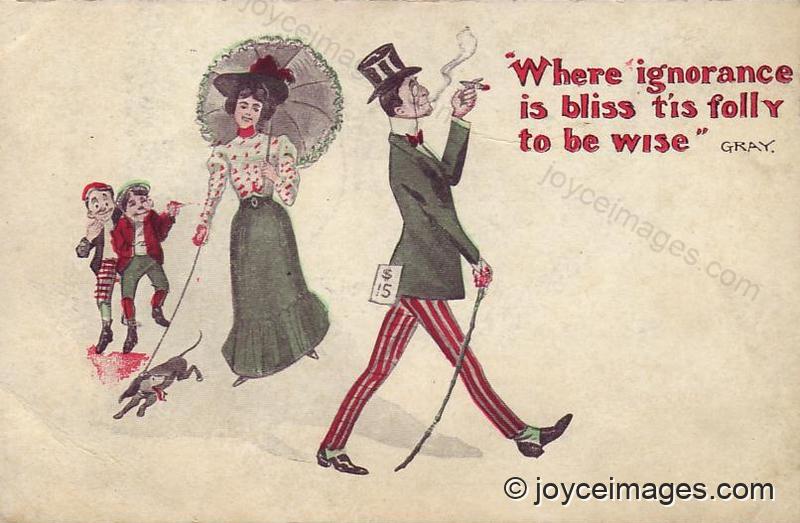
"At this remark, passed obviously in the spirit of where ignorance is bliss," (U16.593)
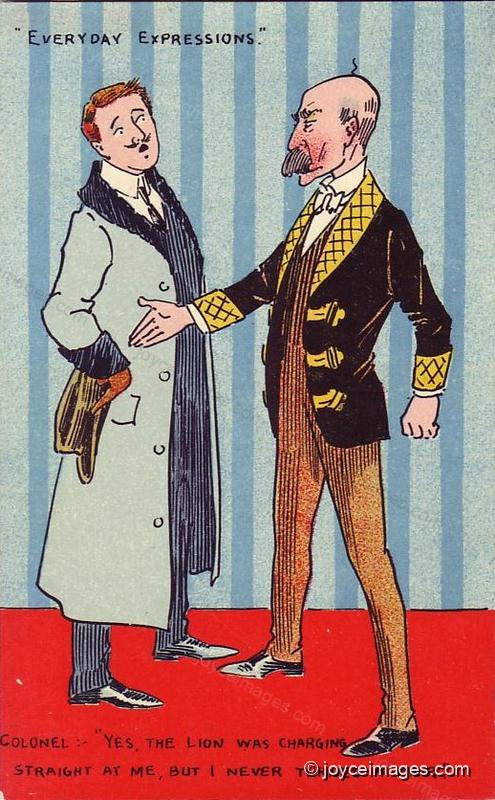
"Mr B. and Stephen, each in his own particular way, both instinctively exchanged meaning glances, in a religious silence of the strictly entre nous variety however, towards where Skin-the-Goat, alias the keeper, not turning a hair, was drawing spurts of liquid from his boiler affair." (U16.594)
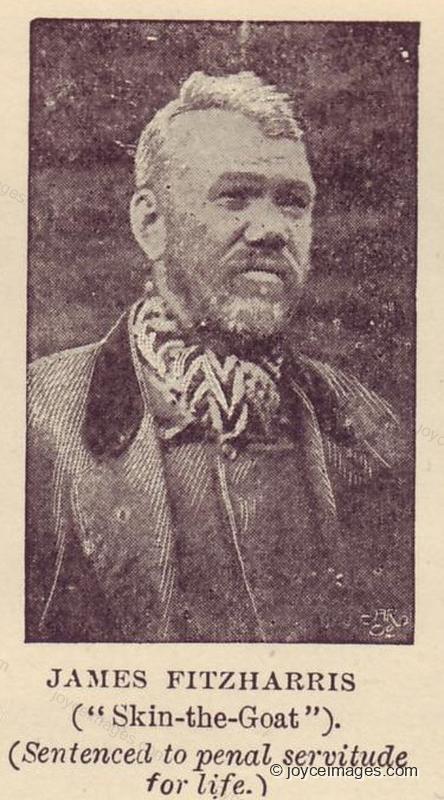
"His inscrutable face, which was really a work of art, a perfect study in itself, beggaring description, conveyed the impression that he didn't understand one jot of what was going on. Funny very!" (U16.597)
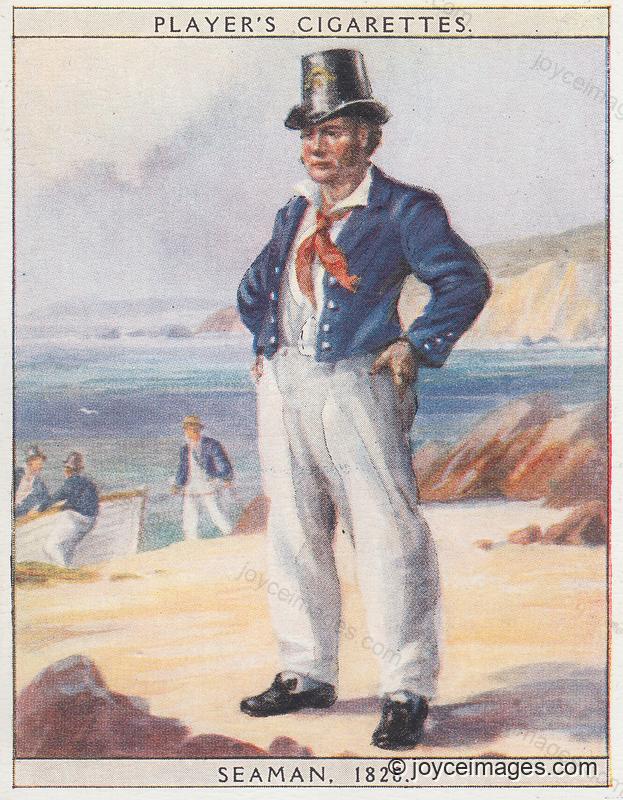
"There ensued a somewhat lengthy pause. One man was reading in fits and starts a stained by coffee evening journal, another the card with the natives choza de, another the seaman's discharge. Mr Bloom, so far as he was personally concerned, was just pondering in pensive mood. He vividly recollected when the occurrence alluded to took place as well as yesterday, roughly some score of years previously in the days of the land troubles, when it took the civilised world by storm, figuratively speaking, early in the eighties, eightyone to be correct, when he was just turned fifteen.
— Ay, boss, the sailor broke in. Give us back them papers.
The request being complied with he clawed them up with a scrape." (U16.601)
— Ay, boss, the sailor broke in. Give us back them papers.
The request being complied with he clawed them up with a scrape." (U16.601)
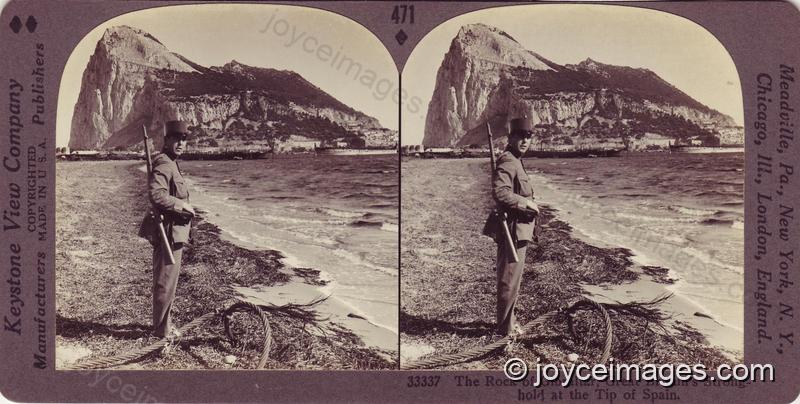
"- Have you seen the Rock of Gibraltar? Mr Bloom inquired.
The sailor grimaced, chewing, in a way that might be read as yes, ay, or no." (U16.611)
The sailor grimaced, chewing, in a way that might be read as yes, ay, or no." (U16.611)
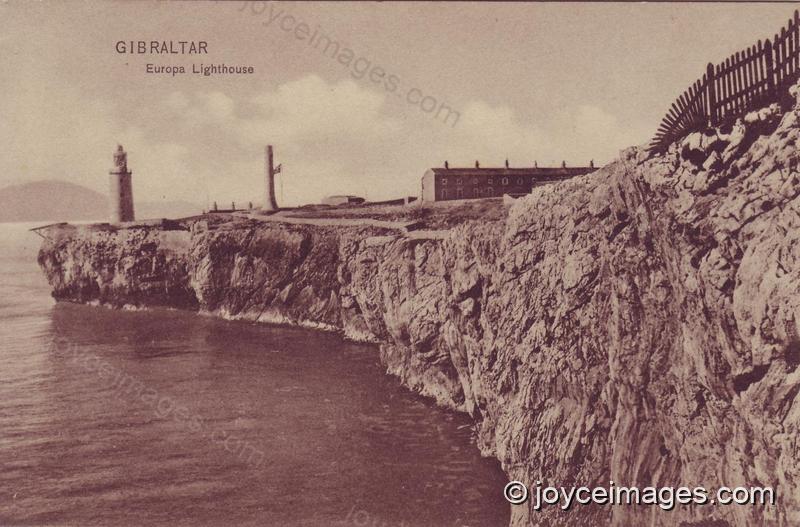
"- Ah, you've touched there too, Mr Bloom said, Europa point thinking he had, in the hope that the rover might possibly by some reminiscences but he failed to do so, simply letting spirt a jet of spew into the sawdust, and shook his head with a sort of lazy scorn." (U16.614)
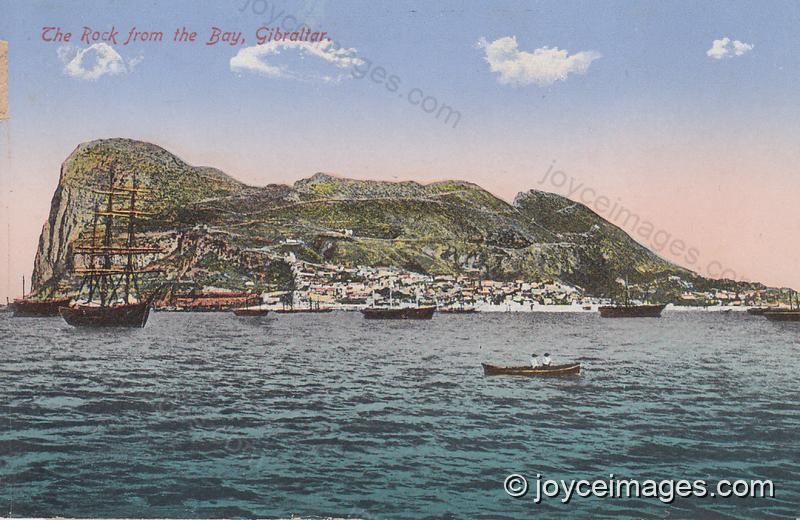
"— What year would that be about? Mr B interrogated. Can you recall the boats?
Our soi-disant sailor munched heavily awhile hungrily before answering:" (U16.618)
Our soi-disant sailor munched heavily awhile hungrily before answering:" (U16.618)
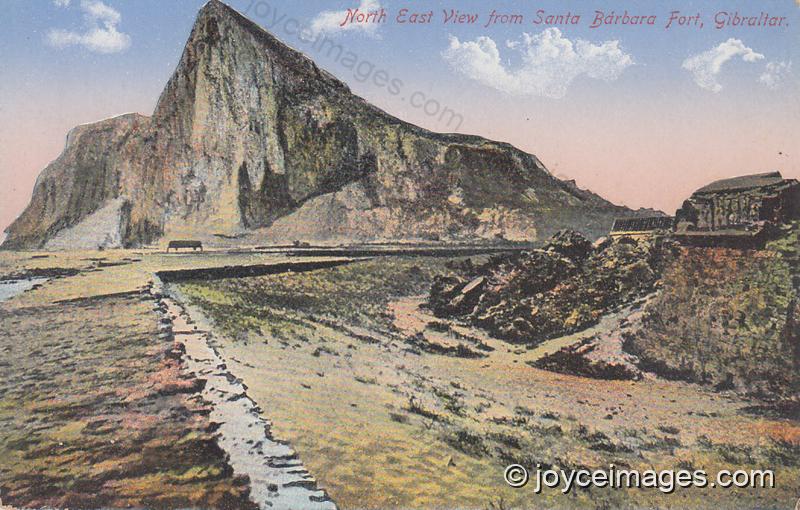
"—I'm tired of all them rocks in the sea, he said, and boats and ships. Salt junk all the time." (U16.622)
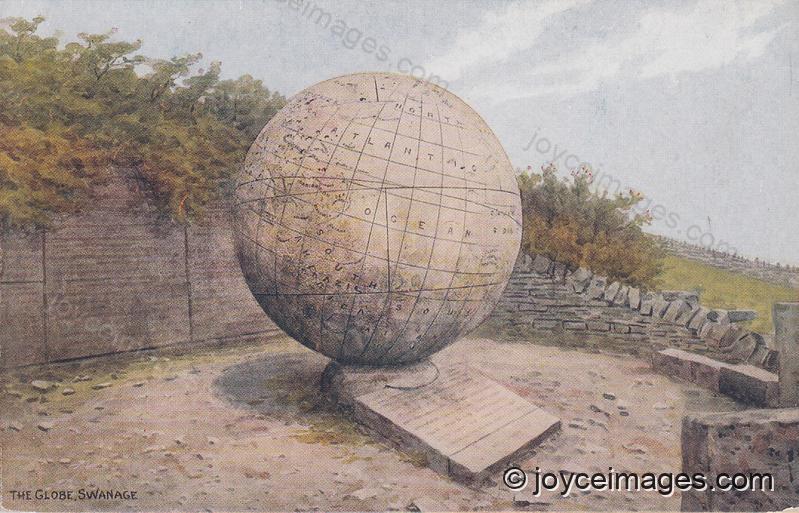
"Tired seemingly, he ceased. His questioner perceiving that he was not likely to get a great deal of change out of such a wily old customer, fell to woolgathering on the enormous dimensions of the water about the globe, suffice it to say that, as a casual glance at the map revealed, it covered fully three fourths of it" (U16.624)
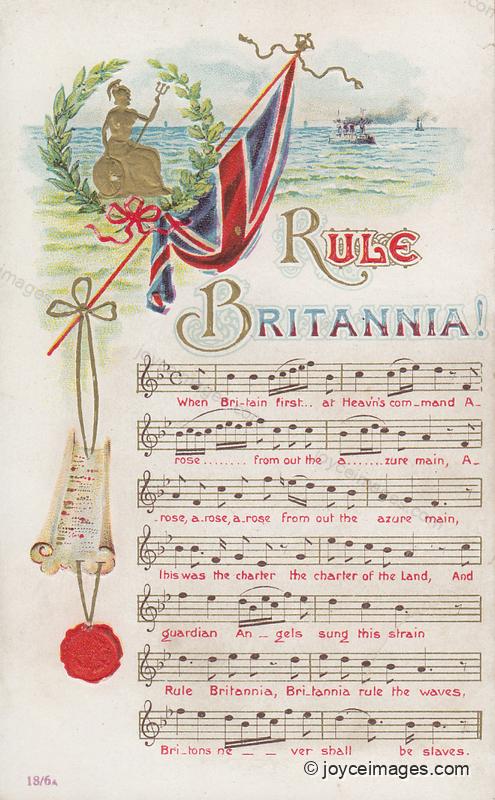
"and he fully realised accordingly what it meant to rule the waves." (U16.628)
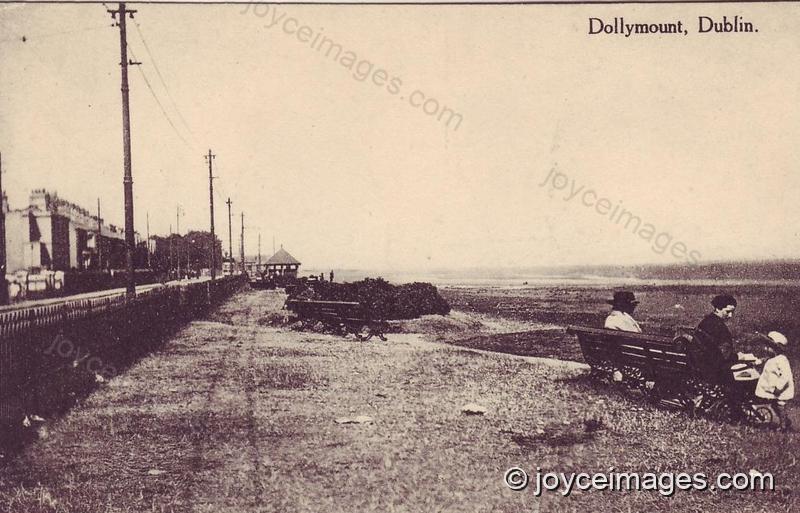
"On more than one occasion, a dozen at the lowest, near the North Bull at Dollymount" (U16.629)