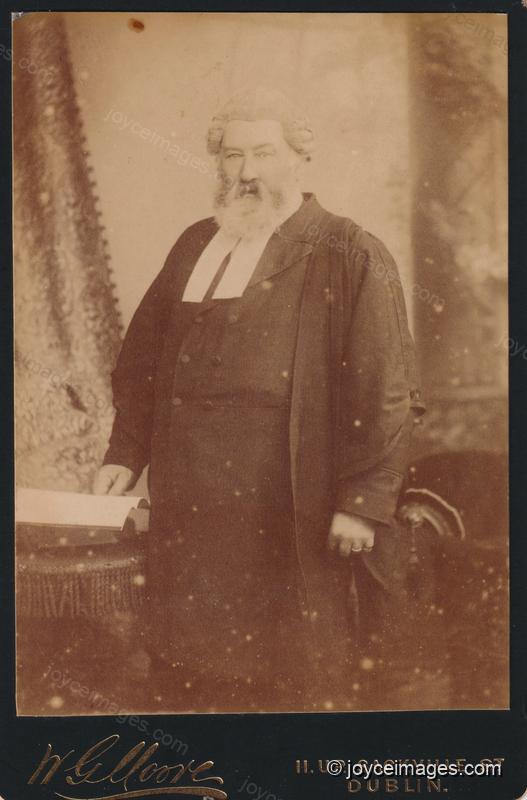
"Solemn as Troy. After his good lunch in Earlsfort terrace." (U8.1151)
[*Ed. I am not sure if this is Sir Frederick Falkiner. Please let me know if you do!]
[*Ed. I am not sure if this is Sir Frederick Falkiner. Please let me know if you do!]
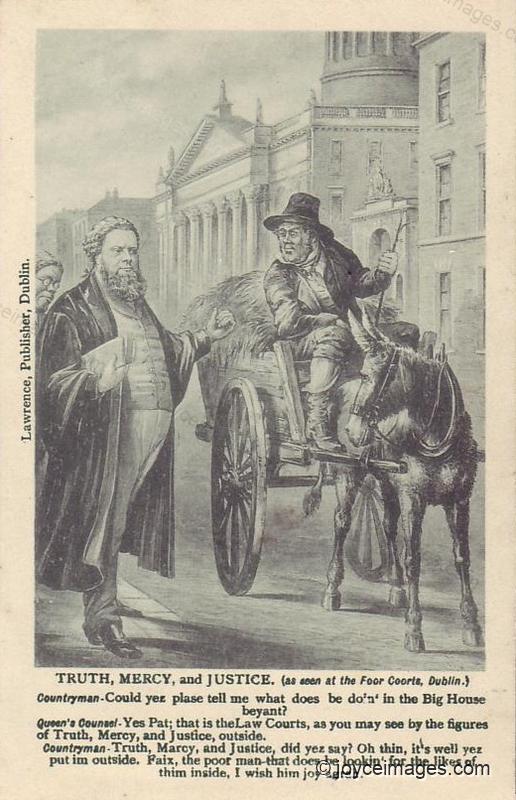
"Old legal cronies cracking a magnum. Tales of the bench and assizes and annals of the bluecoat school. I sentenced him to ten years. I suppose he'd turn up his nose at that stuff I drank." (U8.1152)
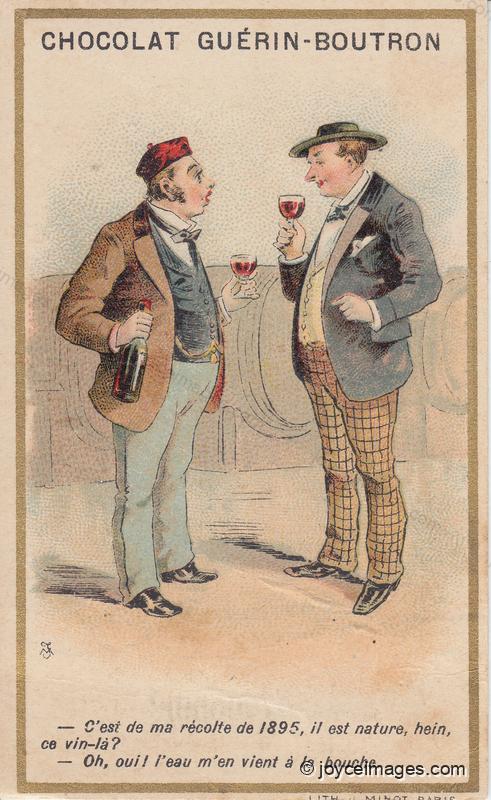
"Vintage wine for them, the year marked on a dusty bottle. Has his own ideas of justice in the recorder's court. Wellmeaning old man. Police chargesheets crammed with cases get their percentage manufacturing crime. Sends them to the rightabout." (U8.1155)
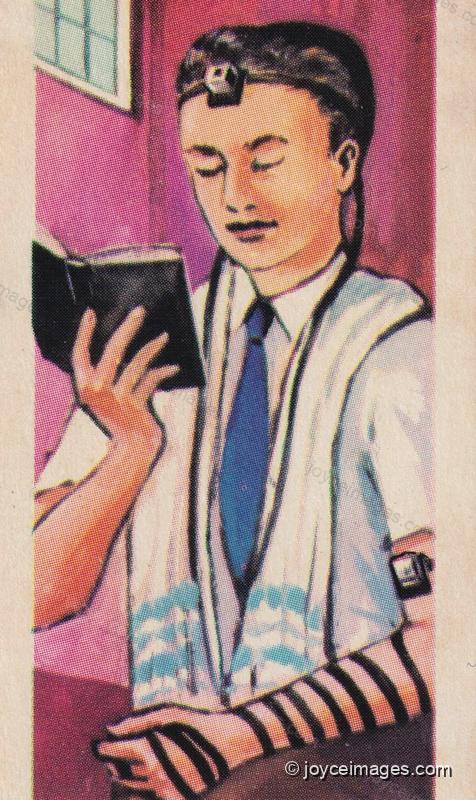
"And the tephilim no what's this they call it poor papa's father had on his door to touch. That brought us out of the land of Egypt and into the house of bondage." (U8.1157)
Tephilin (תְּפִלִּין) are two small black leather boxes containing parchment scrolls with Torah passages. They are traditionally worn by observant Jewish men on the left arm and on the forehead during weekday morning prayers, fulfilling Deut. 6.8.
Tephilin (תְּפִלִּין) are two small black leather boxes containing parchment scrolls with Torah passages. They are traditionally worn by observant Jewish men on the left arm and on the forehead during weekday morning prayers, fulfilling Deut. 6.8.
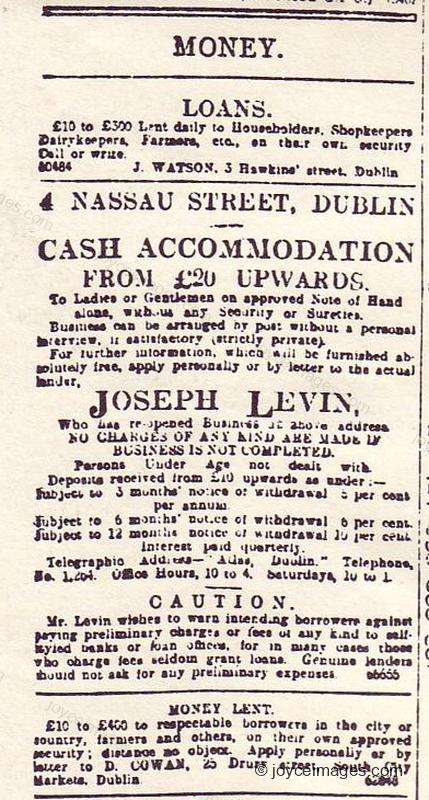
"The devil on moneylenders. Gave Reuben J a great strawcalling. Now he's really what they call a dirty jew." (U8.1158)
[*Ed. Some Dublin moneylenders, as advertised on the front page of the Freeman's Journal.]
[*Ed. Some Dublin moneylenders, as advertised on the front page of the Freeman's Journal.]
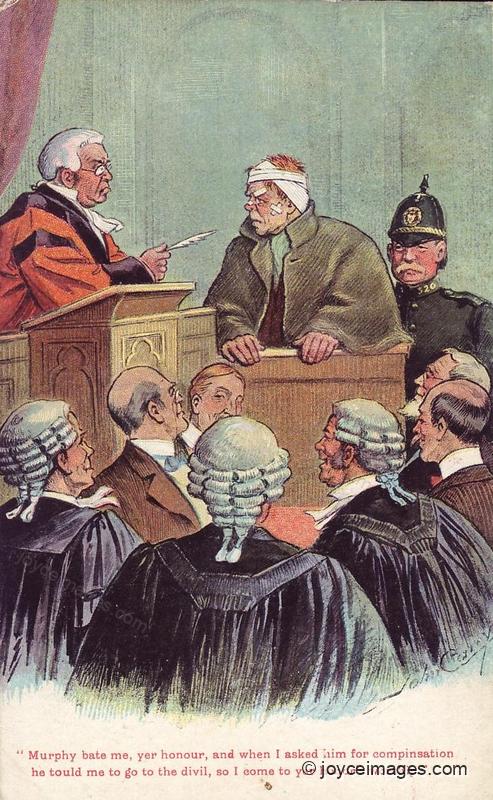
"Power those judges have. Crusty old topers in wigs. Bear with a sore paw. And may the Lord have mercy on your soul." (U8.1159)

"Hello, placard. Mirus bazaar. His excellency the lord lieutenant. Sixteenth today it is. In aid of funds for Mercer's hospital." (U8.1162)
(Image courtesy of the ZJJF)
(Image courtesy of the ZJJF)

"His excellency the lord lieutenant." (U8.1162)
[*Ed. The Lord Lieutenant of Ireland, aka the Viceroy, was the King/Queen's representative in Ireland. In the Middle Ages some Lords Lieutenant had been Irish noblemen; later they were almost always British. Lords Lieutenant were appointed for no set term but served for 'His/Her Majesty's pleasure'. The post ebbed and flowed in importance, being used on occasion as a form of exile for British politicians who had fallen out of favour in St. James's Court or Westminster; in other occasions it was a stepping stone to a future career. Two Lords Lieutenant, Lord Hartington (in 1756) and the Duke of Portland (in 1783) went from Dublin Castle to become the British Prime Minister.
This CDV shows Lord Carlisle, twice Lord Lieutenant of Ireland (1855-58 and 1859-64); Carlisle bridge was named after him.]

[*Ed. The Lord Lieutenant of Ireland held a number of overlapping roles. He was
* the representative of the King = Viceroy
* the head of the executive in Ireland
* (on occasion) a member of the English or British cabinet
* (on occasion) commander-in-chief in Ireland
* the font of mercy, justice and patronage
* Grand Master of the Order of St. Patrick
* he also held an important ceremonial role.
The office of Lord Lieutenant, like the British government in Ireland, was generally unpopular with Irish nationalists. This CDV shows Lord Spencer, twice Lord Lieutenant of Ireland (1868-74 and 1882-85), during whose tenure the Phoenix Park Murders took place.]

[*Ed. In 1904, William Humble Ward, 2nd Earl of Dudley (1867 - 1932), was Lord Lieutenant of Ireland. He was born in London and educated at Eton. His father died when he was 17 and he inherited enormous wealth along with the Earldom of Dudley. He became part of the social circle of the Prince of Wales (later King Edward VII), who attended his wedding to Rachel Gurney in 1891. He was active in the Conservative Party and held office in the 1895 government of Lord Salisbury. In 1902 Dudley was appointed Lord Lieutenant of Ireland, in which post he displayed great extravagance but also some political and administrative ability. This photo, used in the advertisement for the Mirus bazaar, was taken by Lafayette in Dublin.]

"In aid of funds for Mercer's hospital." (U8.1163)
[*Ed. There is a strong tradition of fundraising events to benefit public hospitals in Ireland. From 1939, a Derby Irish Hospitals Sweepstake ticket. The Mercers' Hospital was built in 1734 with funds donated by Mrs. Mary Mercer. Located on William street, it had some 100 beds.]
[*Ed. There is a strong tradition of fundraising events to benefit public hospitals in Ireland. From 1939, a Derby Irish Hospitals Sweepstake ticket. The Mercers' Hospital was built in 1734 with funds donated by Mrs. Mary Mercer. Located on William street, it had some 100 beds.]
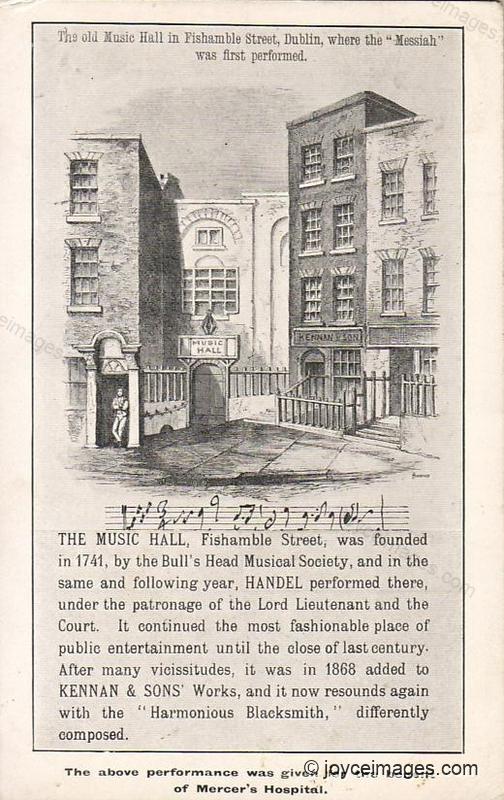
"The Messiah was first given for that." (U8.1163)
[*Ed. Bloom is correct. On March 27th 1742 the Dublin Journal announced: "For the relief of Prisoners in the several Gaols, and for the Support of Mercer's Hospital in Stephen's Street, and of the Charitable Infirmary on the Inns Quay, on Monday the 12th of April, will be performed at the Musick Hall on Fishamble Street, Mr Handel's new Grand Oratorio call'd the MESSIAH, in which the Gentlemen of the Choirs of both Cathedrals will assist." The first performance actually took place a day later, on April 13th 1742, indeed with choirs and soloists from both St. Patrick's and Christ Church cathedrals.]
[*Ed. Bloom is correct. On March 27th 1742 the Dublin Journal announced: "For the relief of Prisoners in the several Gaols, and for the Support of Mercer's Hospital in Stephen's Street, and of the Charitable Infirmary on the Inns Quay, on Monday the 12th of April, will be performed at the Musick Hall on Fishamble Street, Mr Handel's new Grand Oratorio call'd the MESSIAH, in which the Gentlemen of the Choirs of both Cathedrals will assist." The first performance actually took place a day later, on April 13th 1742, indeed with choirs and soloists from both St. Patrick's and Christ Church cathedrals.]
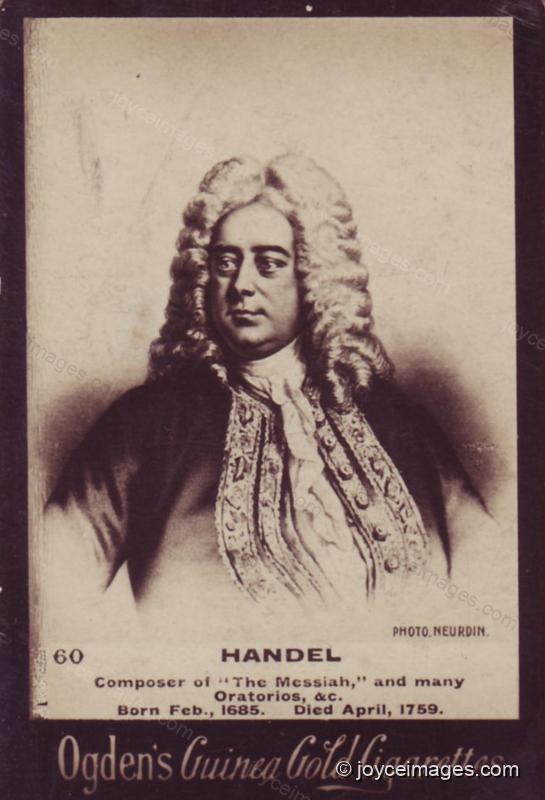
"Yes. Handel." (U8.1164)

[*Ed. Handel is said to have played on the organ of St. Michan's church while he was in Dublin]
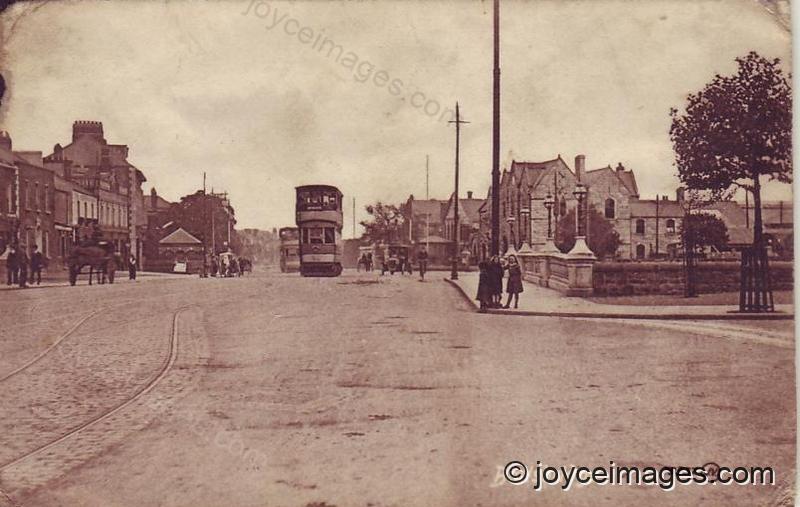
"What about going out there: Ballsbridge. Drop in on Keyes." (U8.1164)
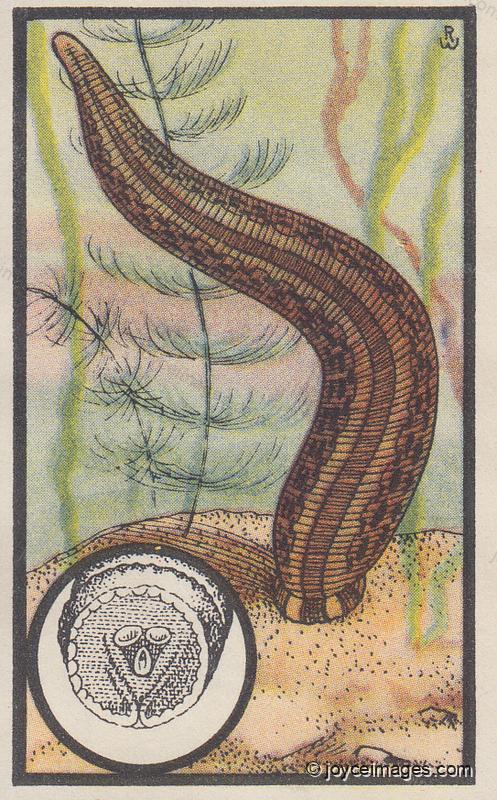
"No use sticking to him like a leech. Wear out my welcome. Sure to know someone on the gate." (U8.1165)