
"Past Richmond bridge at the doorstep of the office of Reuben J. Dodd, solicitor, agent for the Patriotic Insurance Company," (U10.1192)

"an elderly female about to enter changed her plan and retracing her steps by King's windows smiled credulously on the representative of His Majesty. From its sluice in Wood quay wall under Tom Devan's office Poddle river hung out in fealty a tongue of liquid sewage." (U10.1193)

"Above the crossblind of the Ormond Hotel, gold by bronze, Miss Kennedy's head by Miss Douce's head watched and admired." (U10.1197)

"On Ormond quay Mr Simon Dedalus, steering his way from the greenhouse for the subsheriff's office, stood still in midstreet and brought his hat low. His Excellency graciously returned Mr Dedalus' greeting. From Cahill's corner the reverend Hugh C. Love, M. A., made obeisance unperceived, mindful of lords deputies whose hands benignant had held of yore rich advowsons." (U11.1199)

"On Grattan bridge Lenehan and M'Coy, taking leave of each other, watched the carriages go by." (U10.1204)
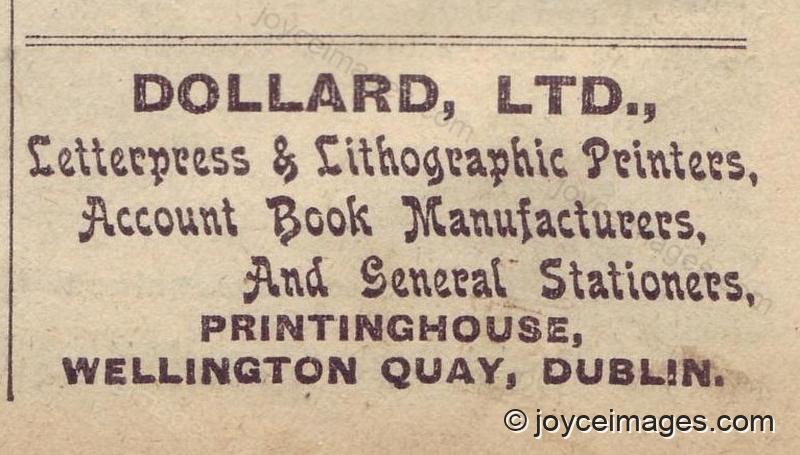
"Passing by Roger Greene's office and Dollard's big red printinghouse" (U10.1205)
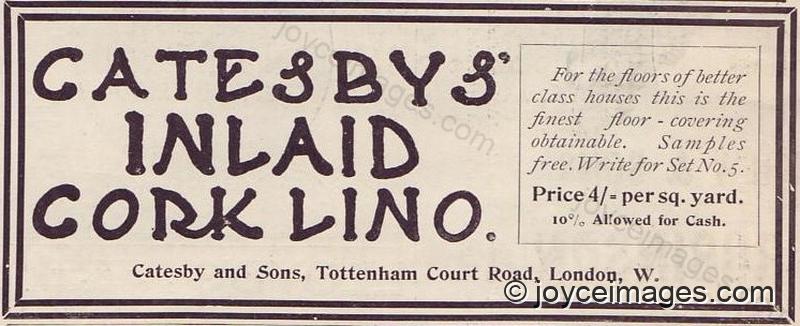
"Gerty MacDowell, carrying the Catesby's cork lino letters for her father who was laid up, knew by the style it was the lord and lady lieutenant but she couldn't see what Her Excellency had on because the tram and Spring's big yellow furniture van had to stop in front of her on account of its being the lord lieutenant." (U10.1206)

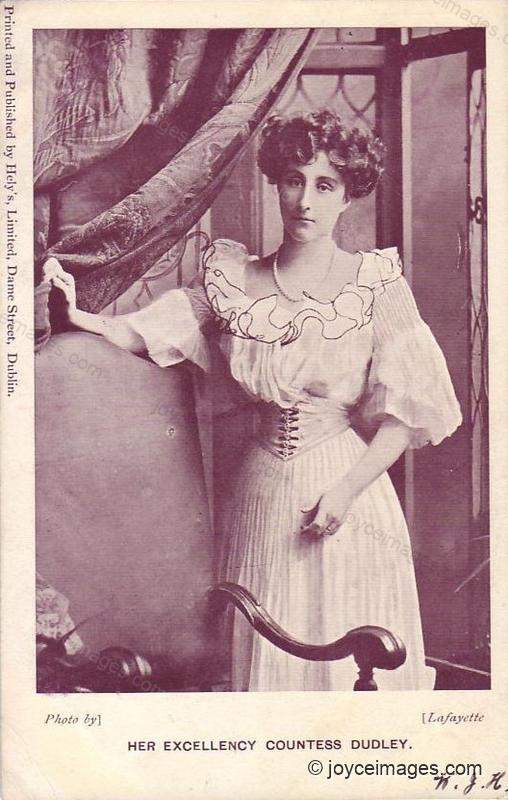
"Beyond Lundy Foot's from the shaded door of Kavanagh's winerooms John Wyse Nolan smiled with unseen coldness towards the lord lieutenantgeneral and general governor of Ireland. The Right Honourable William Humble, earl of Dudley, G.C.V.O., passed Micky Anderson's all times ticking watches and Henry and James's wax smartsuited freshcheeked models, the gentleman Henry, dernier cri James." (U10.1211)
"Over against Dame gate Tom Rochford and Nosey Flynn watched the approach of the cavalcade. Tom Rochford, seeing the eyes of lady Dudley on him," (U10.1216)
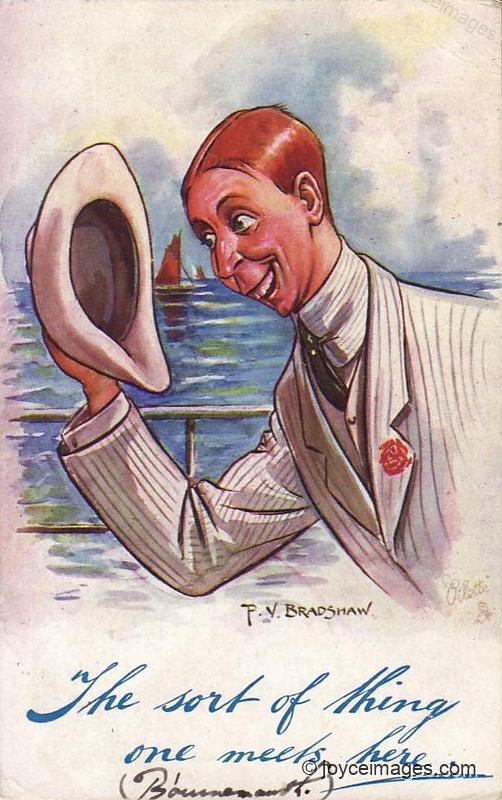
"took his thumbs quickly out of the pockets of his claret waistcoat and doffed his cap to her." (U10.1219)
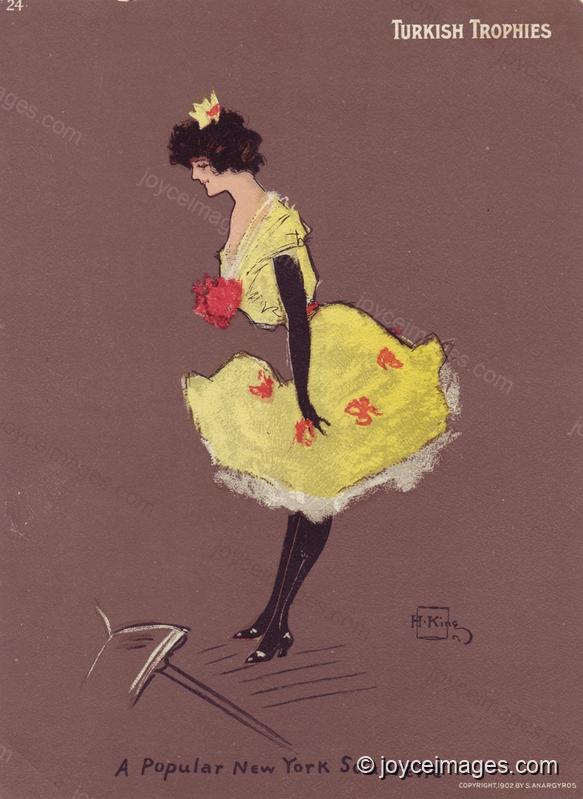
"A charming soubrette, great Marie Kendall, with dauby cheeks and lifted skirt, smiled daubily from her poster upon William Humble, earl of Dudley, and upon lieutenantcolonel H.G. Hesseltine and also upon the honourable Gerald Ward A.D.C." (U10.1220)
[*Ed. Another charming soubrette, from a U.S. cigarette trophy card.
A soubrette is variously defined as
* a minor female role as a pert lady's maid in a comedy
* more generally, an actress who plays the young and saucy roles
* a category of soprano voice or role characterized by a flirtatious or streetwise manner.]
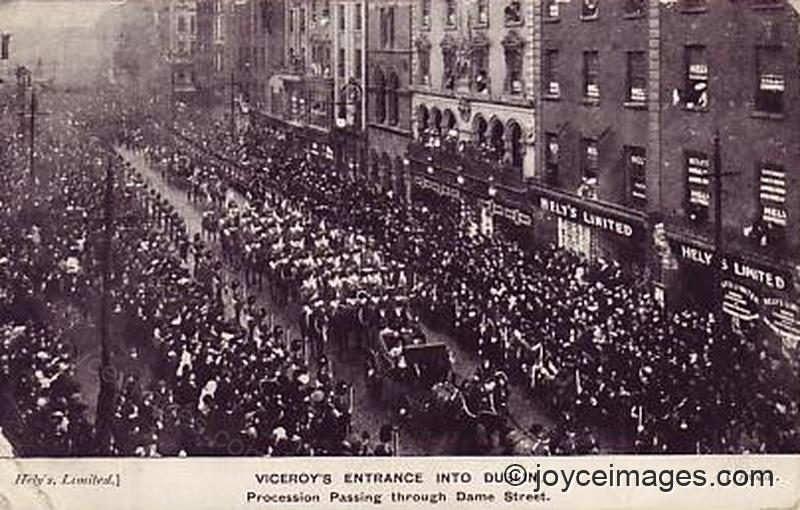
"From the window of the D.B.C. Buck Mulligan gaily, and Haines gravely, gazed down on the viceregal equipage over the shoulders of eager guests," (U10.1223)
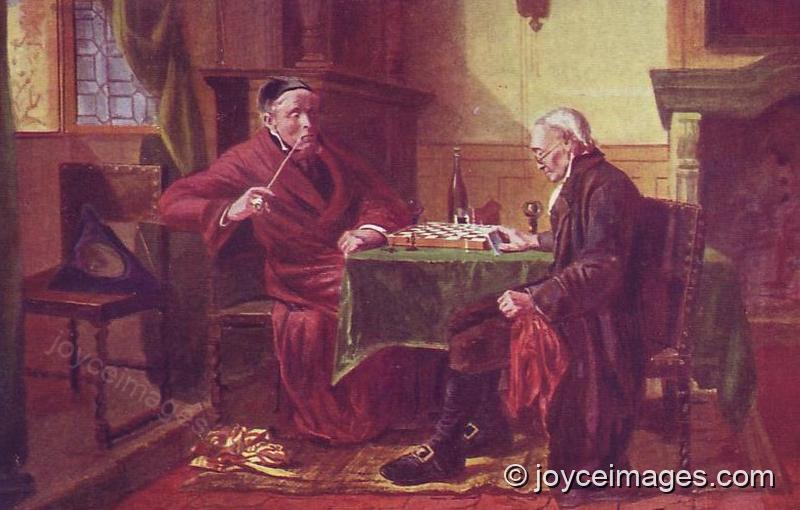
"whose mass of forms darkened the chessboard whereon John Howard Parnell looked intently." (U10.1225)
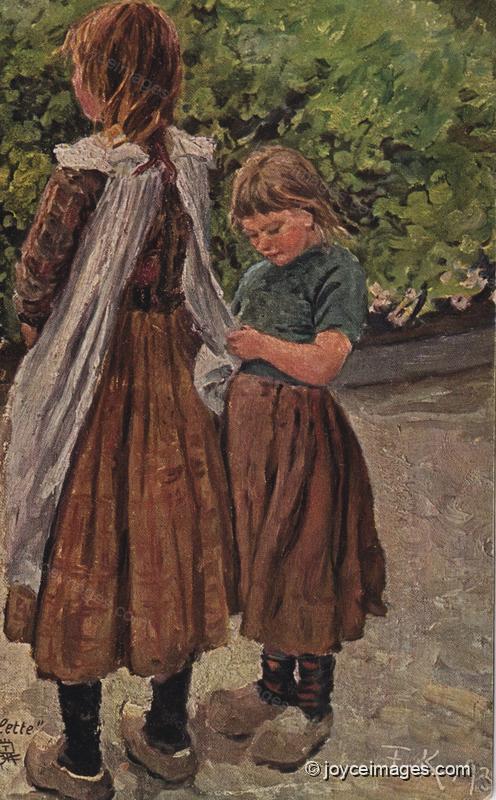
"In Fownes's street Dilly Dedalus, straining her sight upward from Chardenal's first French primer, saw sunshades spanned and wheelspokes spinning in the glare. John Henry Menton, filling the doorway of Commercial Buildings, stared from winebig oyster eyes, holding a fat gold hunter watch not looked at in his fat left hand not feeling it." (U10.1226)
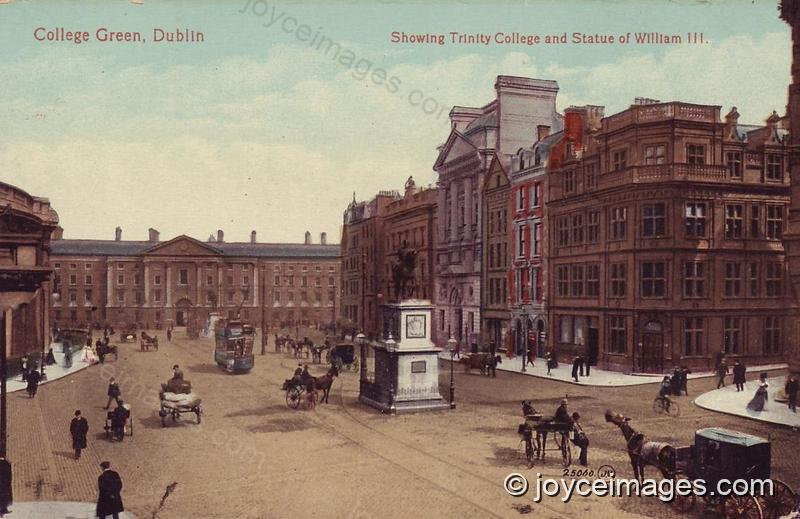
"Where the foreleg of King Billy's horse pawed the air Mrs Breen plucked her hastening husband back from under the hoofs of the outriders." (U10.1231)
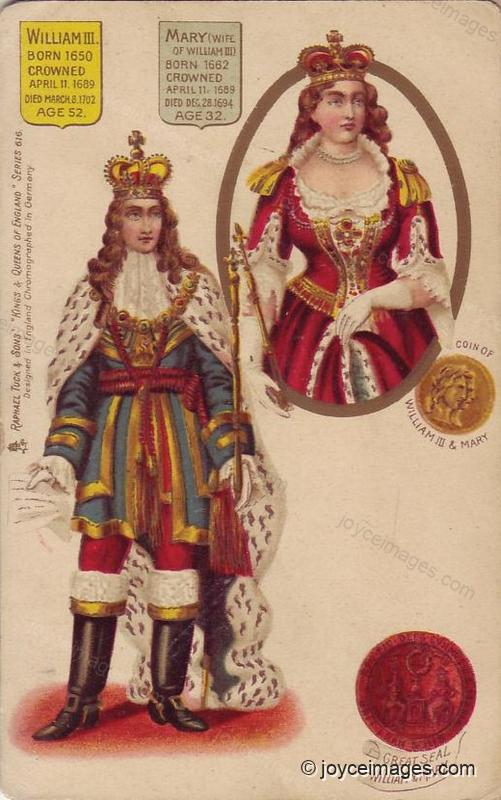
[*Ed. William III of England (1650 - 1702), whose statue on a horse stands in College Green, is known in Ireland, mainly among Unionists, as King Billy. A Dutch aristocrat and a Protestant Prince of Orange, he won the English, Scottish and Irish Crowns after defeating his uncle and father-in-law, the Catholic king James II. In Ireland, the decisive battles between the Williamites and the Jacobites were the battle of the Boyne (1690) and the Battle of Aughrim in Co. Galway (1691). The latter battle was the bloodiest ever fought on Irish soil (over 7,000 people were killed) and practically ended Jacobitism in Ireland.]